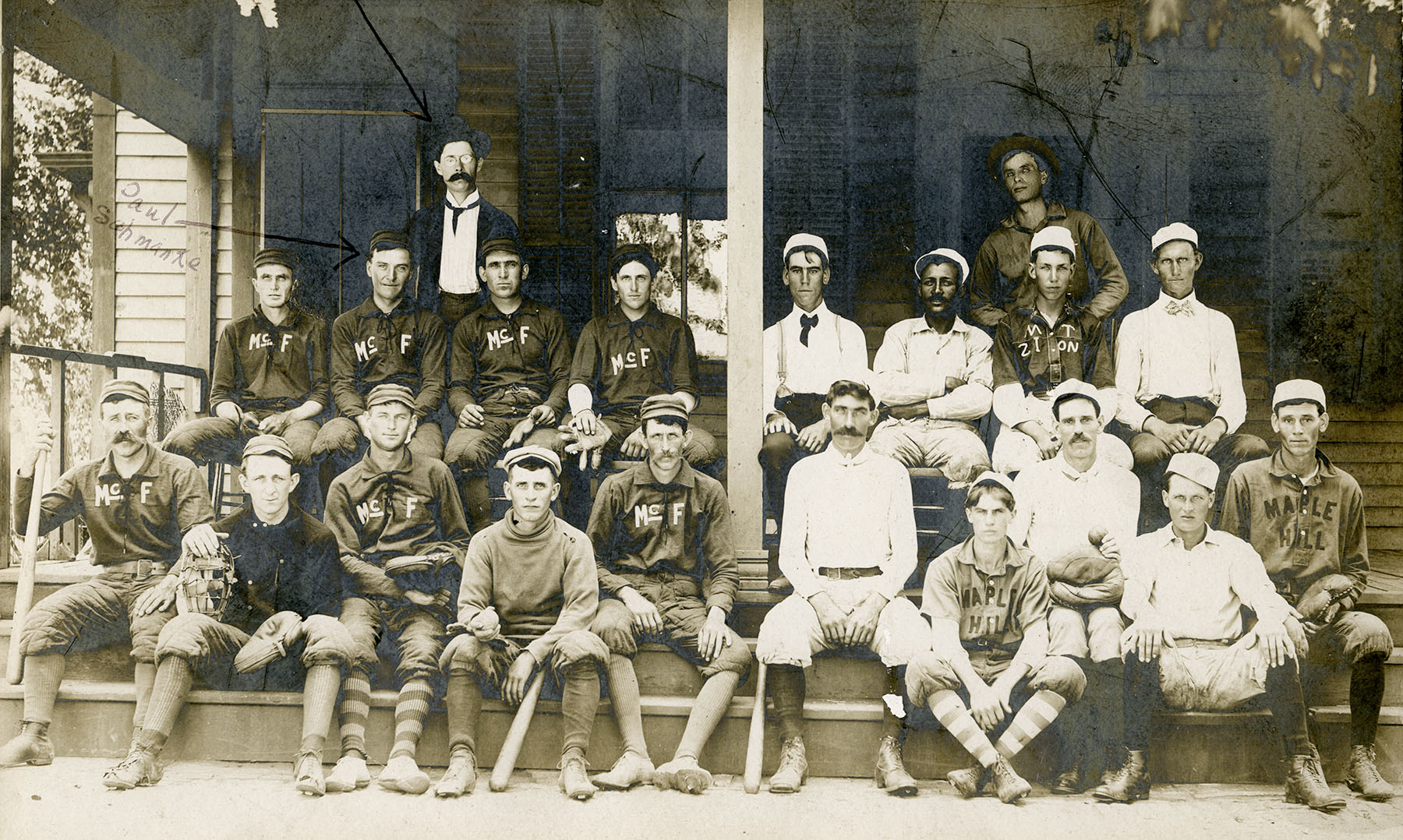
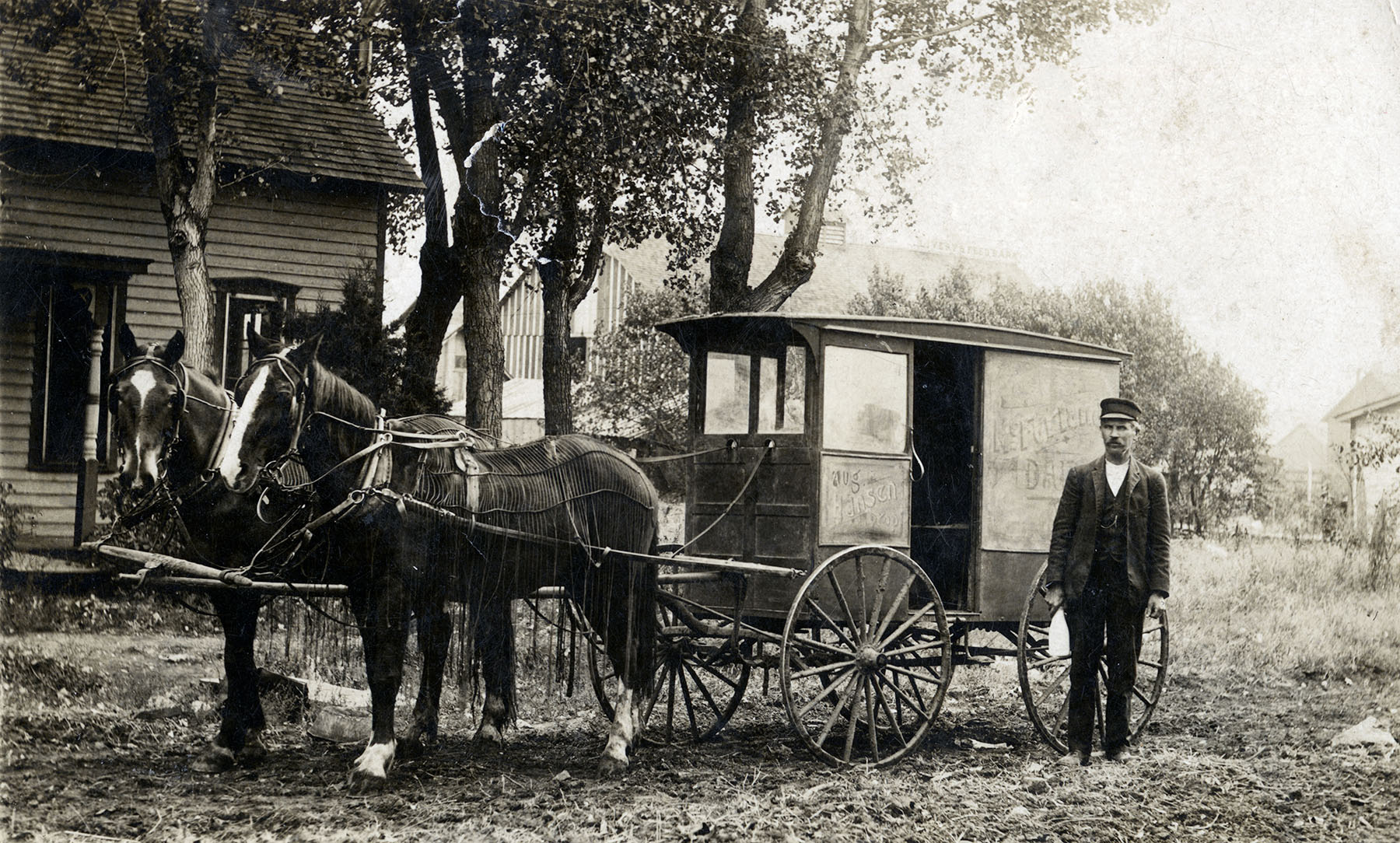
Located in the beautiful Mill Creek Valley, McFarland was founded by S.H. Fairfield in June of 1887. The town was platted at the junction point where the Rock Island Railroad branched Northwest to Denver and the Pacific coast, and southwest toward the Gulf of Mexico. Mr. Fairfield named his new town “McFarland” after his friend Judge N.C. McFarland of Topeka.
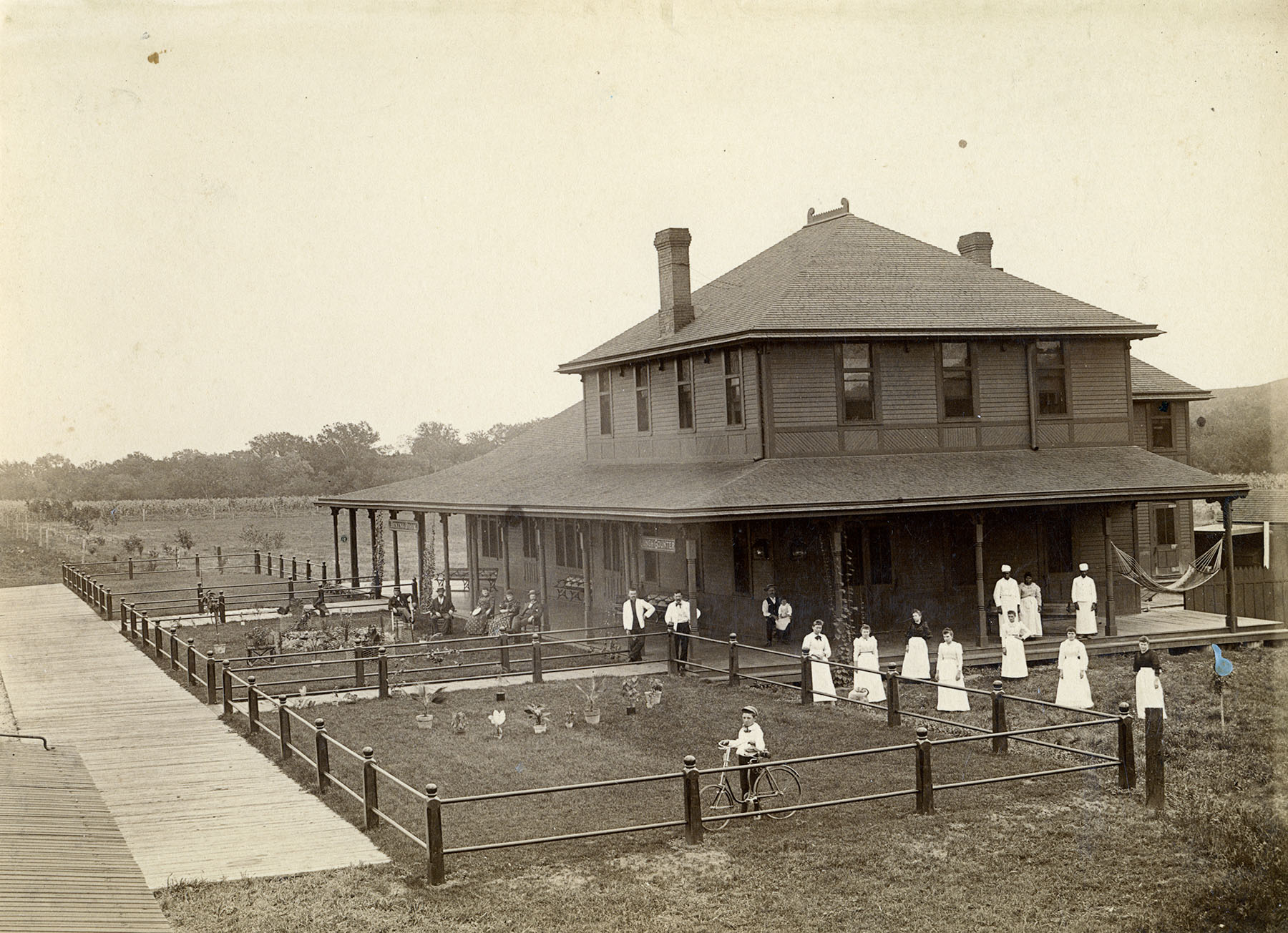
The land was surveyed and town lots were laid out by a railroad engineer with the east-west streets parallel with the mainline track and a main north-south road forming a T-town. Mr. Fairfield found some investors and formed a town company and sold lots and built for dwellings, a store and a hotel. John Winkler purchased the 25-room hotel in July 1887 and named it the “Denver House.”
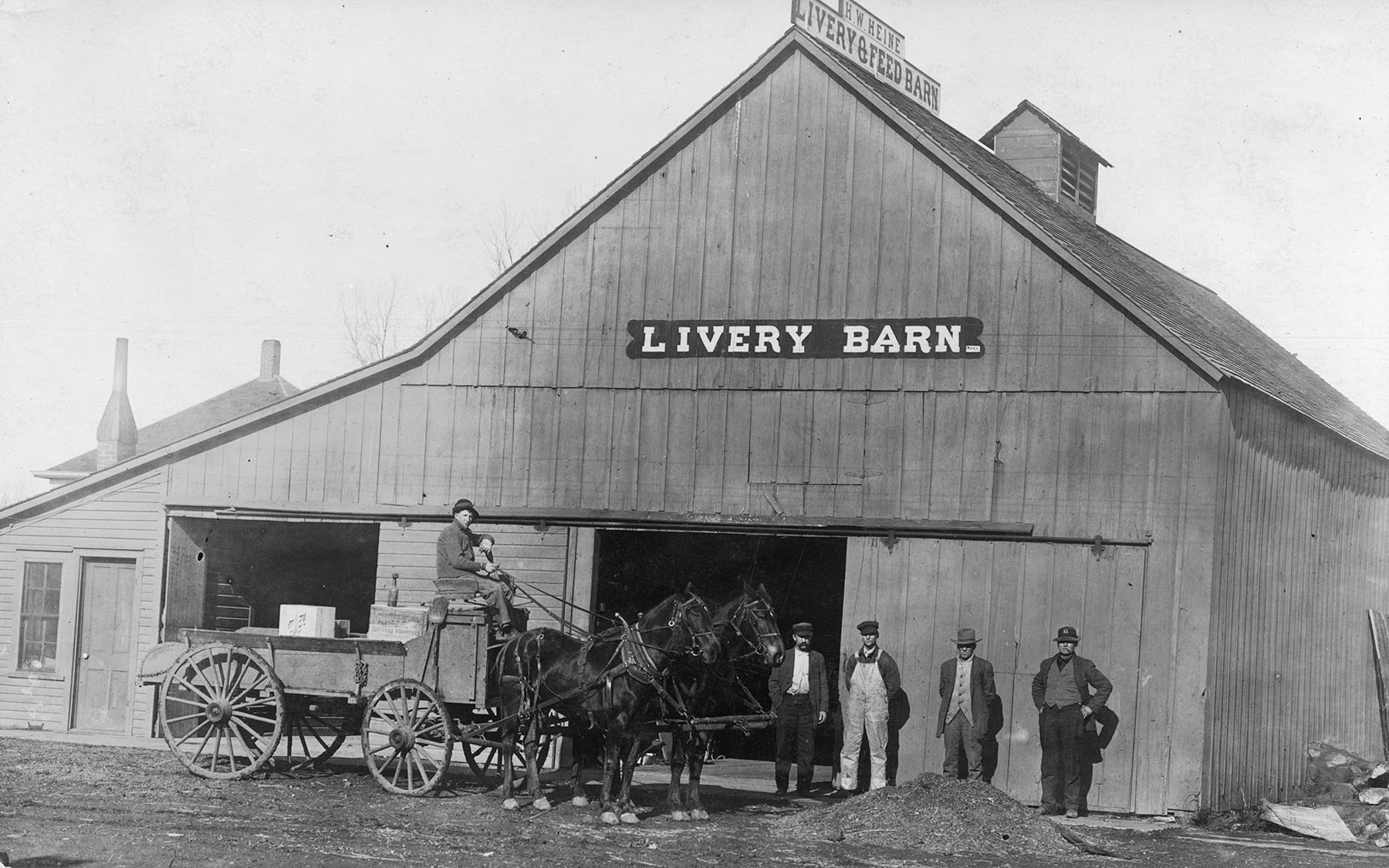
By 1901 the Rock Island had constructed a hotel/eating house, a depot, a roundhouse, coal chute, ice house, pump house, sand house, filter house, section house, stockyards, and six miles of side tracks. This same year the railroad expanded its stockyards by building large sheep and cattle barns, feeding pens, and purchased about 500 acres of land south of Mill Creek for sheep grazing. A bridge across the creek was built to herd the livestock to pastures on the hill. In November of 1902 it was reported that the sheep rest had handled 700 cars of livestock in the past three months- about 250,000 head of sheep, cattle, and horses. As the railroad grew, so did McFarland businesses and residences. By 1906, the population of the town was 317.
When the Rock Island eating house burned down in February of 1911, the railroad moved quickly to replace it. The building and furnishings cost over $100,000 and was named the “Modoc” after the famous Modoc Singers from Topeka. The hotel was modern even by todays standards with each room having electricity, a telephone, and running water. The town of McFarland didn’t have electricity until 1917.
Railroad activity peaked in the 1920’s and and so did the population with 579 residents. The demand for local entertainment resulted in a new city park, a movie theater, and a combination dance hall and roller skating rink. By the late 1930’s, railroads were replacing their steam locomotives with diesel engine which no longer required frequent stops for fuel and water. By 1955, the last working switch engine was moved to Topeka. Switching tracks and buildings, including the Modoc, were removed or torn down.
Alan Winkler generously took the time to share stories and the history of McFarland the town were he grew up and still resides. Click here to choose from his stories.






Categories: Early History, Gallery, Museum Blog, Photographs


 Wabaunsee County Historical Society and Museum
if EMP ever occurs, these pics might be the future not the past.
LikeLike